


 English
 Español
News

Coupler & Plug Standards Compared: ARO vs. Industrial vs. Automotive
 2026.06.29
 Industry news
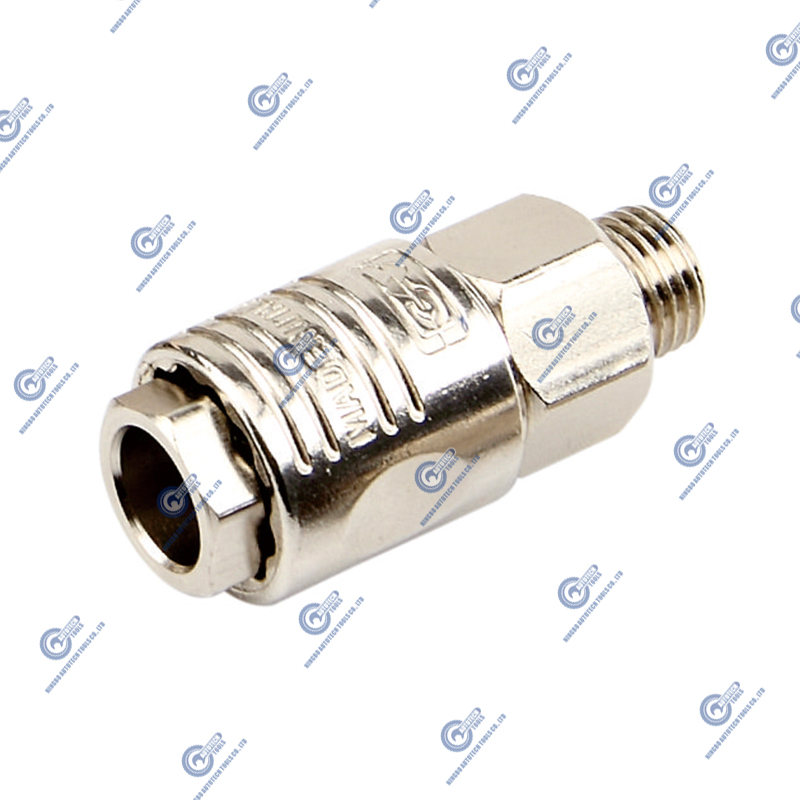
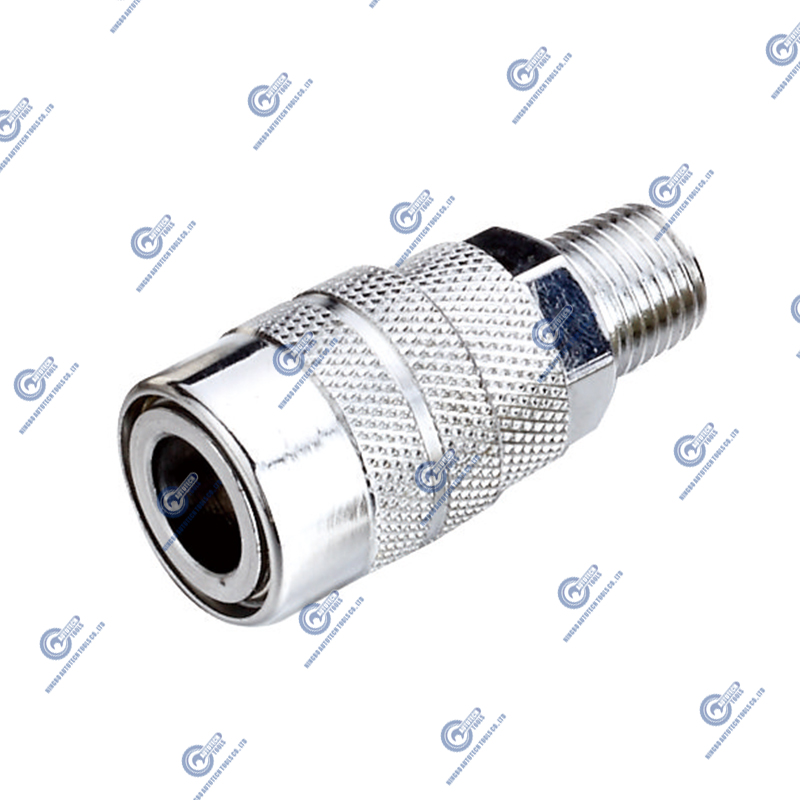
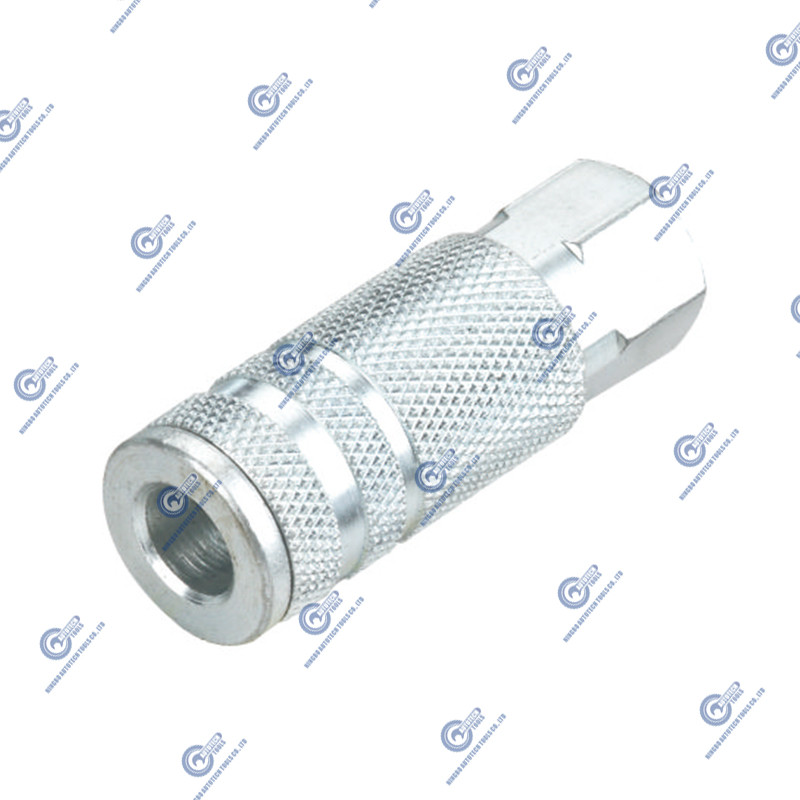
ARO, Industrial Interchange, and Automotive (Type C/Tru-Flate) are the three most common coupler and plug standards in North America, and they are not interchangeable with each other. ARO fittings are common in industrial and manufacturing settings, Industrial Interchange couplers offer higher airflow for heavy-duty tools, and Automotive-style fittings are the standard found on most consumer-grade compressors and hardware store tool kits.
Mixing these standards without an adapter is one of the most common buying mistakes — the plugs simply won't lock into a mismatched coupler. Below, we break down each standard's design, sizing, airflow performance, and best-fit applications.
Why Coupler Standards Aren't Universal
Unlike NPT threads, which follow a single universal specification, quick-connect couplers were developed by different manufacturers decades ago, each with its own ball-lock mechanism and plug profile. Even couplers that look nearly identical can fail to lock together if they belong to different standards, because the internal ball groove dimensions and plug nose diameters differ slightly between systems.
This is why identifying your existing coupler standard before buying new hoses, tools, or fittings is critical — buying based on size alone (e.g., "1/4 inch") isn't enough, since multiple standards share the same nominal size.
ARO Standard: Common in Industrial Settings
ARO (named after the original manufacturer, ARO Corporation) couplers are widely used in industrial and manufacturing environments, particularly in facilities with legacy pneumatic equipment. They feature a distinct ball-lock design with a slightly different plug nose shape compared to automotive-style fittings.
Key Characteristics
- Common sizes: 1/4 inch and 3/8 inch are most prevalent.
- Pressure rating: Typically rated up to 300 PSI, suitable for demanding industrial use.
- Airflow: Moderate to good, with less restriction than basic automotive fittings.
ARO fittings are often found in older factory installations and certain regions outside North America where this standard became the default for industrial pneumatic systems.
Industrial Interchange Standard: High-Flow Performance
Industrial Interchange (sometimes labeled "Industrial" or "I/M") couplers are designed with a larger internal bore than automotive-style fittings, allowing for significantly better airflow — making them the preferred choice for high-CFM tools.
Key Characteristics
- Airflow advantage: Larger bore design reduces pressure drop by an estimated 15-20% compared to automotive couplers at the same nominal size.
- Build quality: Typically constructed from hardened steel or brass for heavy repeated use.
- Pressure rating: Often rated up to 300 PSI or higher, suitable for sandblasters, grinders, and impact tools.
This standard is the go-to choice for professional contractors and manufacturing facilities running multiple high-demand tools off a single compressed air line.
Automotive Standard: The Most Common Consumer Fitting
Automotive-style couplers (also called Type C or "Tru-Flate" style) are the most widely sold fitting type in hardware stores and big-box retailers across North America. If you bought a compressor or air tool kit from a typical retail store, it almost certainly uses this standard.
Key Characteristics
- Widespread availability: Found on the vast majority of consumer-grade compressors, hoses, and tool kits.
- Pressure rating: Typically rated for 150-200 PSI, sufficient for most home and light commercial use.
- Airflow: Smaller bore design results in more restriction than ARO or Industrial Interchange standards.
While convenient and inexpensive, automotive fittings are not ideal for high-CFM tools like sandblasters, since the narrower internal passage limits airflow under heavy demand.
Side-by-Side Standard Comparison
The table below summarizes the core differences between the three standards across sizing, airflow, and typical use case.
| Standard | Airflow Performance | Typical Pressure Rating | Best For |
|---|---|---|---|
| ARO | Moderate-Good | Up to 300 PSI | Legacy industrial systems |
| Industrial Interchange | High | Up to 300+ PSI | High-CFM tools, construction sites |
| Automotive (Type C) | Lower | 150-200 PSI | Home & light commercial use |
How to Identify Your Existing Standard
If you're unsure which standard your current setup uses, follow these steps before purchasing replacement parts:
- Check the packaging or manual of your compressor or tool kit for a labeled standard (e.g., "Type C," "Industrial," or "ARO").
- Measure the plug's nose diameter and compare it against published standard charts, since dimensions differ slightly between systems even at the same nominal size.
- Bring an existing plug or coupler to a hardware store and test-fit it against known-standard parts if labeling is unavailable.
Universal adapters are available that allow cross-standard compatibility, but they add bulk and an additional connection point where leaks can occur — it's generally better to standardize your entire system on one type where possible.
Final Recommendation
For home and light commercial users, Automotive-style (Type C) couplers remain the most practical choice due to widespread availability and lower cost. For professionals running high-CFM tools like sandblasters or large grinders, Industrial Interchange couplers offer the best airflow performance and durability under heavy use. ARO fittings remain relevant primarily for maintaining compatibility with existing legacy industrial equipment rather than as a first choice for new setups.
Whichever standard you choose, ensure all hoses, plugs, and tools in your system match the same standard to avoid relying on adapters that can introduce leaks and reduce overall airflow efficiency.

Ningbo Autotech Tools Co.,Ltd was founded in 2014 as a professional manufacturer of tire valves, tire repair tools & air quick couplings.
Product links
Contact Us
-
Address:No.16 Gaoqiang Road, Jiangnan Industrial Zone, Gaoqiao Town, Yinzhou District, Ningbo, China. 315175
-
Tel:+86-0574-89073063
-
E-mail:jimmy@autotechtool.com
