


 English
 Español
News
 Home / News / Industry news / Air Hose & Fitting: A Practical Guide to Pneumatic Connections and Safety
 Air Hose & Fitting: A Practical Guide to Pneumatic Connections and Safety
 2026.09.21
 Industry news
Compressed air is one of the most reliable sources of power in a workshop, yet the path from the compressor to the tool depends on two components that are often taken for granted: the air hose and the fitting. A weak hose or a mismatched coupler can quietly reduce tool performance, waste energy, and create real safety risks. As a manufacturer of pneumatic components and tire service equipment, we have seen how many performance complaints trace back to a poor connection between the air supply and the tool. This guide covers what to look for when selecting air hose and fitting, how to match them to your equipment, and how to keep them working safely for years.
Why Air Hose and Fitting Control System Performance
An air tool only performs as well as the supply line that feeds it. The hose and the fitting sit directly between the compressor and the tool, and every inch of that path affects pressure and flow.
Three problems cause most pneumatic performance issues:
- Pressure drop. Hoses with too small an inner diameter, excessive length, or restrictive fittings reduce the pressure that actually reaches the tool.
- Leaks. A small leak in a fitting or a cracked hose end wastes compressed air continuously, which lowers tool torque and increases energy bills.
- Unsafe connections. Worn couplers and damaged hoses can blow off under pressure or burst, creating serious hazards in the workshop.
Choosing the right air hose and fitting is not just about convenience. It is the most direct way to protect tool efficiency, keep operating costs low, and reduce the risk of accidents.
Air Hose Basics: Construction, Sizing, and Materials
A quality air hose usually has three layers: a smooth inner tube that carries the air, a reinforcement layer that provides strength and pressure resistance, and an outer cover that protects against abrasion, oil, and weather.
Common Hose Materials
- Rubber. Durable, flexible, and resistant to heat and oil. Rubber hoses handle heavy workshop use well, though they are heavier than other types.
- PVC. Lightweight and inexpensive, with good performance in mild conditions. PVC can become stiff in cold weather and may not survive heavy abrasion.
- Polyurethane. Highly flexible, lightweight, and resistant to kinking. Polyurethane is a good choice for workstations where mobility matters.
Inner Diameter and Pressure Ratings
The inner diameter of the hose determines how much air can flow. A 1/4-inch hose suits light-duty tools, while 3/8-inch and 1/2-inch hoses support general workshop tools and high-consumption tools respectively. Work pressure should remain comfortably below the rated working pressure of the hose, and the burst pressure should never be approached in normal operation.
| Inner Diameter | Typical Applications | Tool Examples |
|---|---|---|
| 1/4 inch | Light duty | Air blow guns, small nailers, tire inflation |
| 3/8 inch | General workshop | Impact wrenches, ratchets, spray guns |
| 1/2 inch | High consumption | Large impact tools, sanders, grinders |
Coupler and Plug Standards and Interchangeability
Not all air fittings are created equal. Over the decades, different regions and industries developed their own interchange designs for quick couplers and plugs. The plug shape, the locking mechanism, and even the diameter vary from one standard to another.
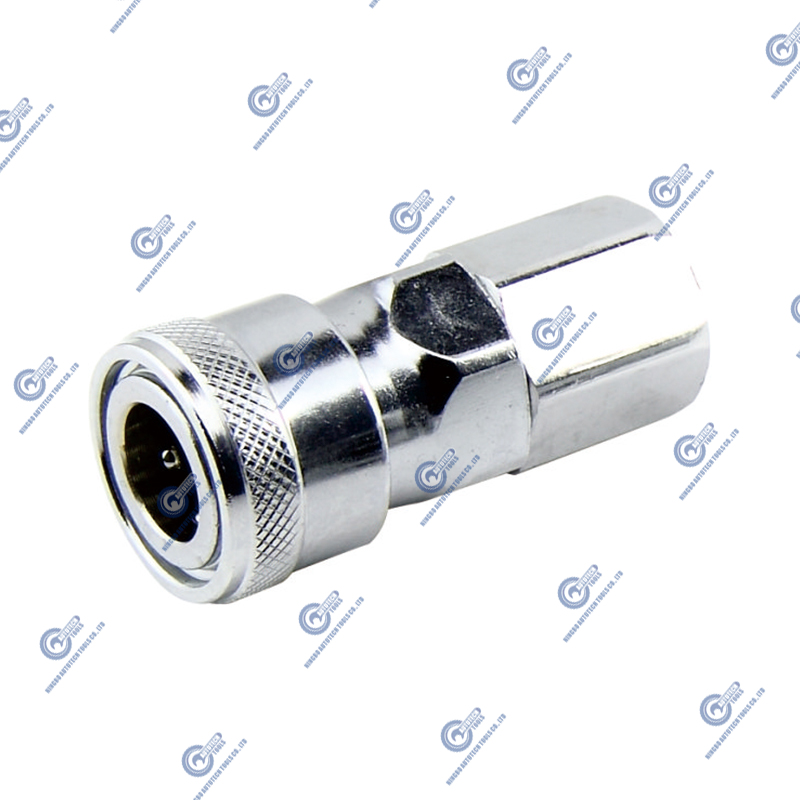
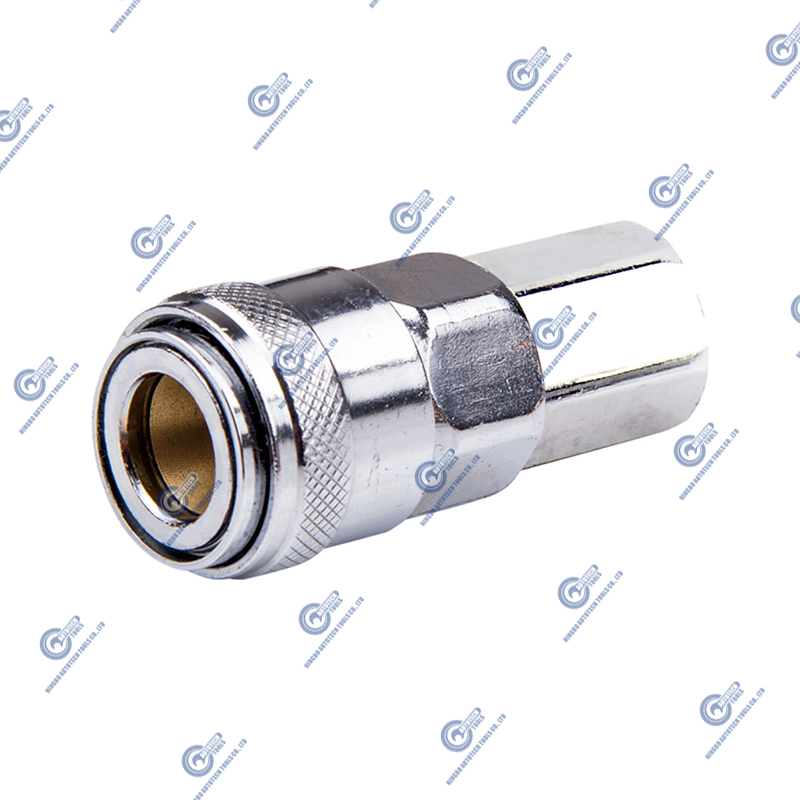
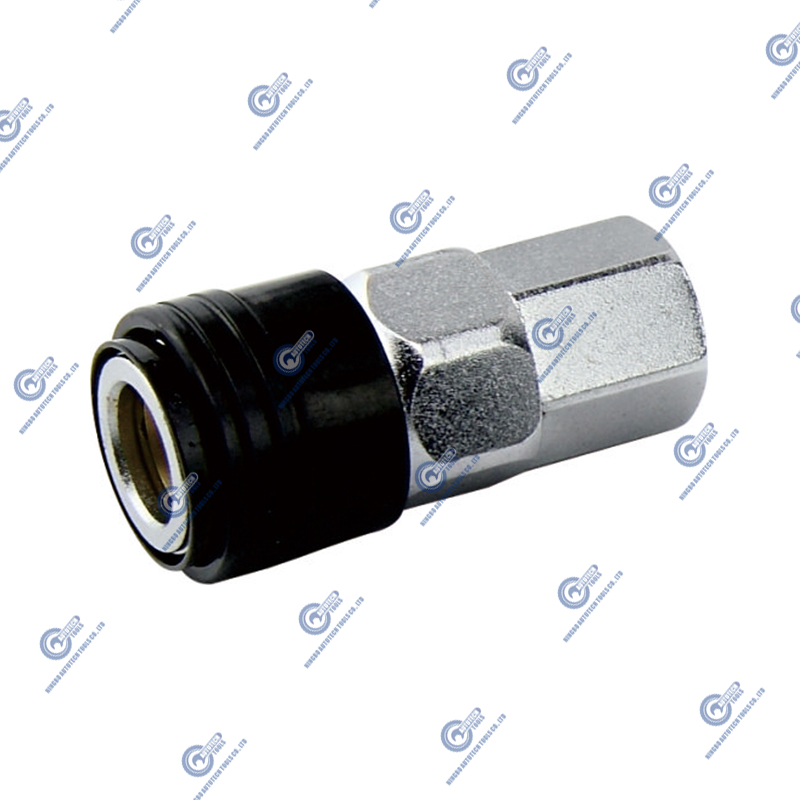
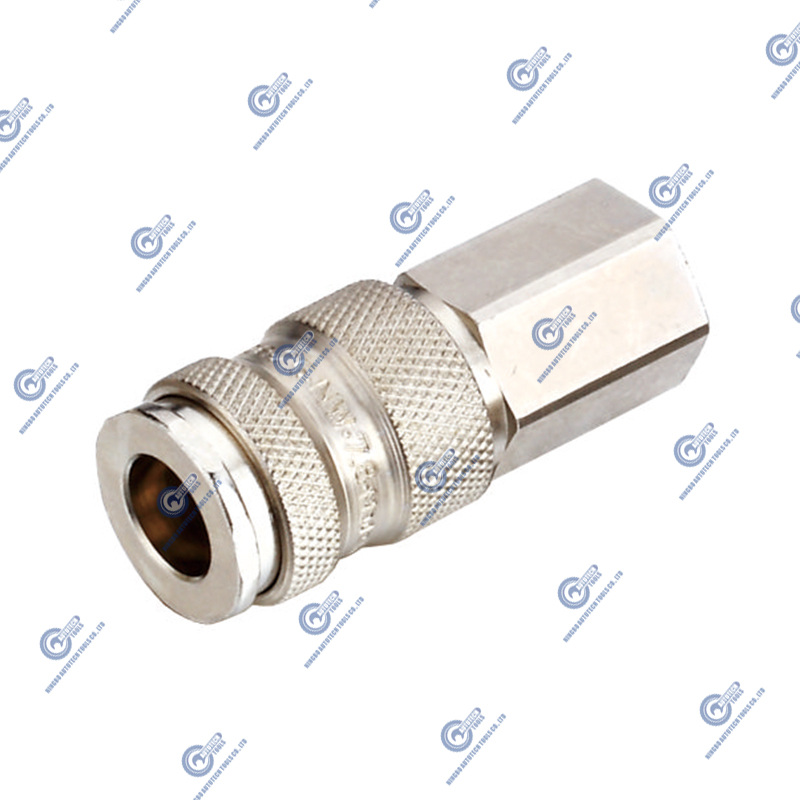
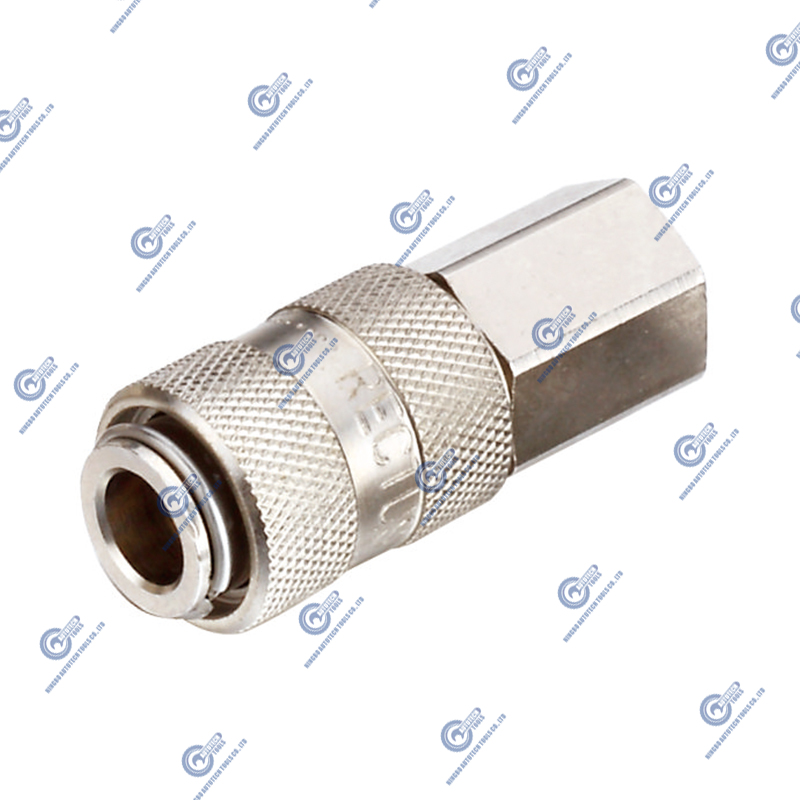
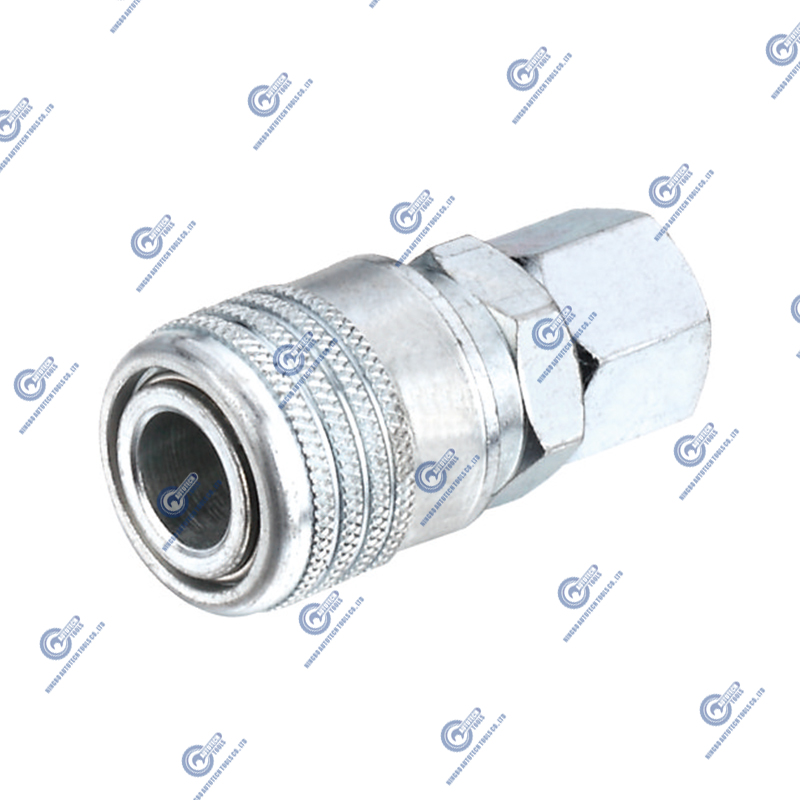
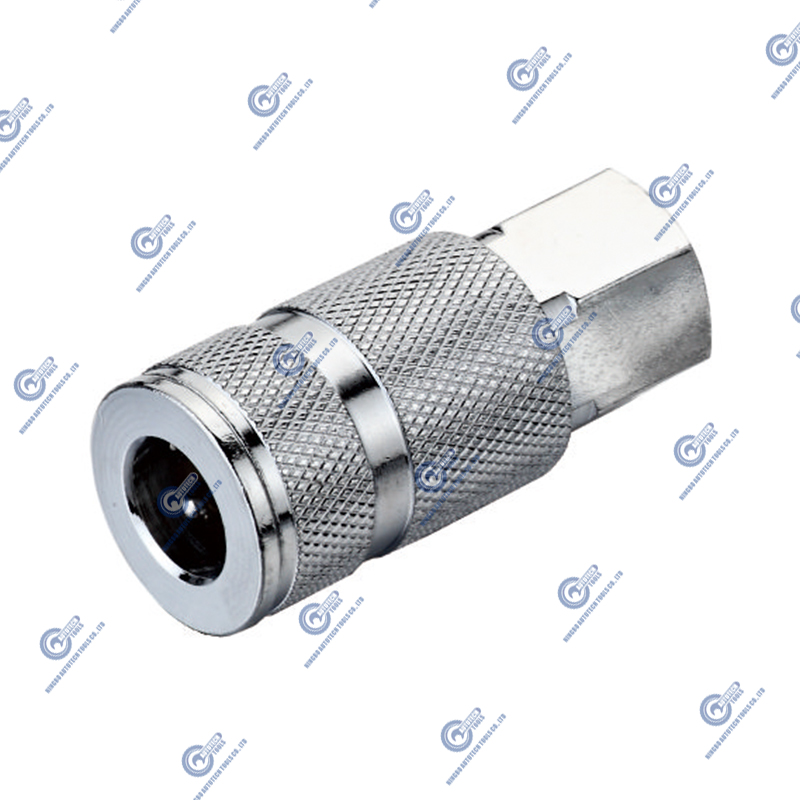
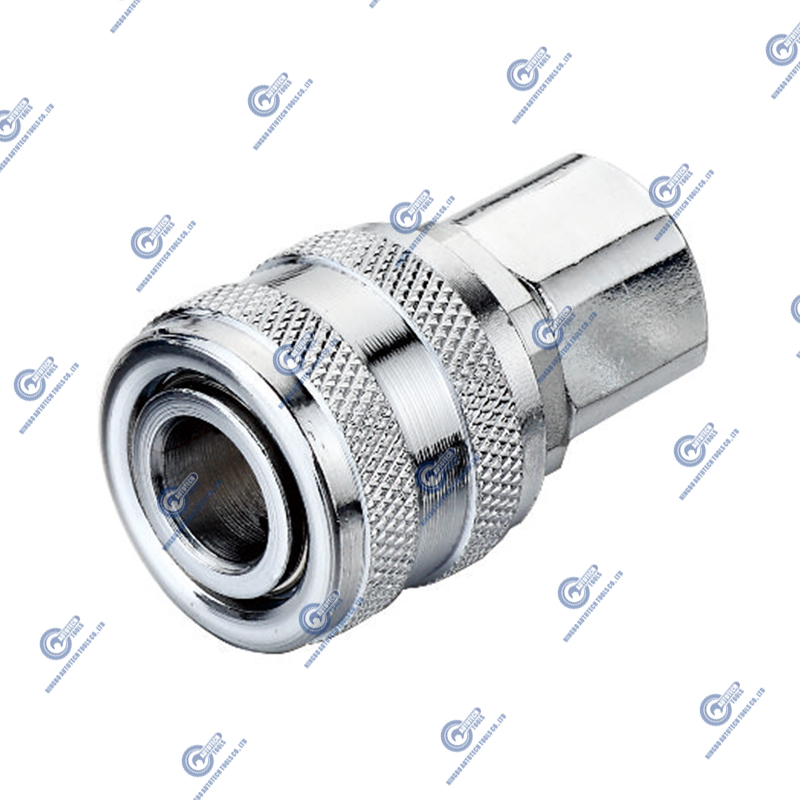
In our factory, we produce couplers and plugs across six major interchange families: Japanese, European, British, industrial, ARO, and Tru-Flate. Each family is mechanically distinct, meaning a European plug will not lock correctly into a Japanese socket, and a Tru-Flate coupler may not seal properly with an industrial plug. Understanding which standard your tools and existing fittings follow is the first step when you add new hoses or replace worn parts.
| Standard | Common Market | Typical Profile |
|---|---|---|
| Japanese | Asia, general industry | Compact, spring-lock sleeve |
| European | Europe | Sleeve-lock, broad compatibility |
| British | United Kingdom | Heavy-duty brass construction |
| Industrial | Global | High flow, robust body |
| ARO | North America | Push-to-connect style |
| Tru-Flate | North America | Common for tire service |
Mixing standards by accident is one of the most common reasons for leaking connections. If you are building a new air line, choosing one standard across all workstations can simplify inventory and reduce the risk of mismatching.
Matching Air Hose and Fitting to Your Tools
Selecting an air hose and fitting is not a one-size-fits-all decision. The right match depends on the air consumption of your tools, the length of the line, and how the hose will be used.
A Simple Selection Approach
- Check the tool air consumption, usually listed in CFM or SCFM at a given pressure.
- Choose a hose inner diameter that can deliver that airflow without excessive pressure drop at the hose length you need.
- Match the hose end thread to the fitting type on your tool inlet or coupler body.
- Select the same interchange standard for couplers and plugs throughout the line.
- Consider the environment: oil resistance, abrasion resistance, and temperature range all matter.
As a rule of thumb, longer hoses need a larger inner diameter to keep pressure loss acceptable. A 50-foot 3/8-inch hose may suit a general workshop, but a 100-foot run may perform better with 1/2-inch bore. Similarly, if multiple tools are used from one supply line, a larger diameter and a high-flow fitting help maintain stable pressure at each tool.
Installation, Daily Checks, and Maintenance
Even the best air hose and fitting will fail early if abused. A little care during installation and daily operation extends service life and keeps the system safe.
Installation Best Practices
- Do not bend the hose beyond its minimum bend radius; sharp bends restrict airflow and weaken the reinforcement.
- Avoid dragging the hose by its body. Pull the hose by the fitting, or use a hose reel with proper strain relief.
- Keep couplers and plugs away from dirt, paint, and grinding dust, especially when disconnecting.
Recommended Maintenance Checklist
- Listen for air leaks at the coupler and the hose ends while the system is under pressure.
- Feel the hose surface for bulges, soft spots, or hardening, which signal internal damage.
- Inspect fittings for cracks, worn locking sleeves, and damaged O-rings; replace seals at the first sign of wear.
- Release the air pressure before disconnecting any fitting.
- Store hoses in a dry, cool place, away from direct sunlight and oil.
When a hose shows repeated cracks near the fitting or the outer cover starts to flake, replacement is cheaper than risking a blowout. The same applies to quick couplers: a coupler that no longer seals or locks reliably should be replaced immediately.
The Larger Pneumatic Picture: From Quick Couplers to Tire Service
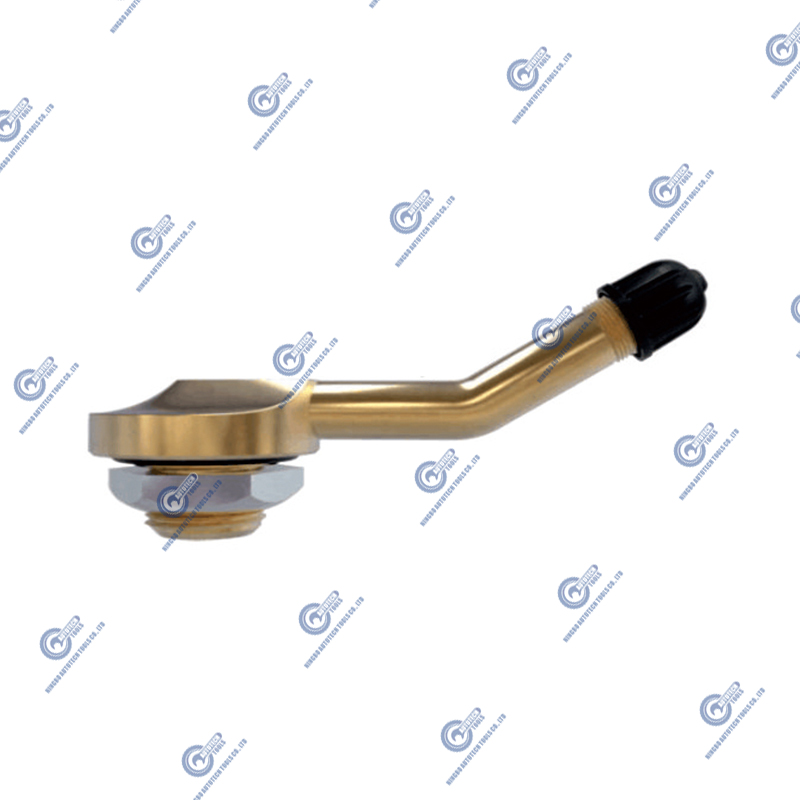
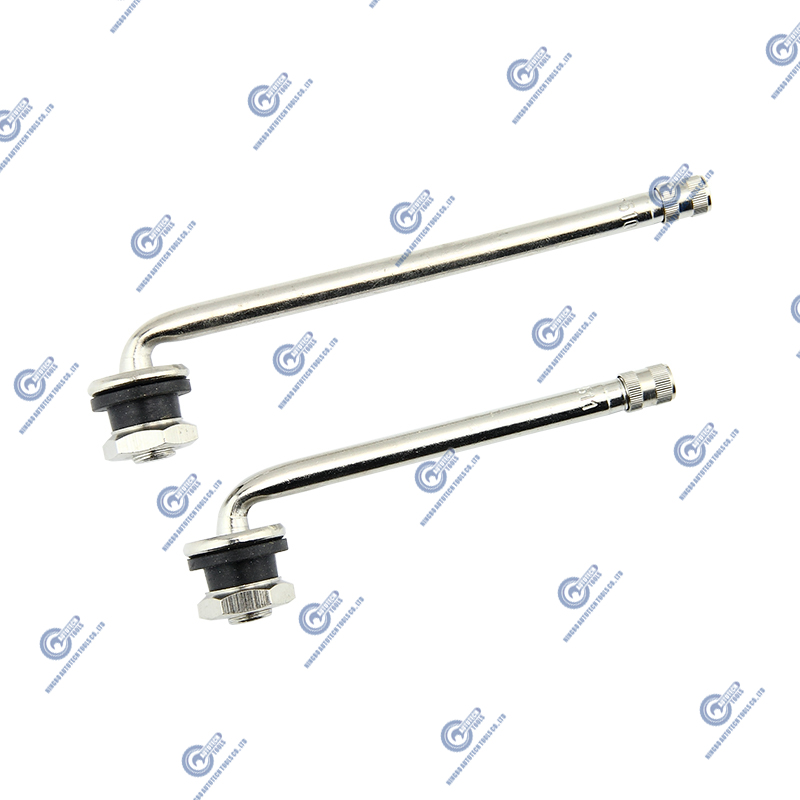
Air hose and fitting do not work in isolation. They connect the compressor to air tools, inflation guns, tire chucks, and a wide range of workshop equipment. At Ningbo Autotech Tools, our product line follows exactly this logic. In addition to couplers and plugs in Japanese, European, British, industrial, ARO, and Tru-Flate styles, we manufacture tire valves, tire gauges and inflators, and tire repair tools. For a workshop that services passenger cars, trucks, or construction machinery, the ability to source the entire pneumatic chain from one partner simplifies quality control and keeps the whole system compatible.
Our factory background also means we can support OEM projects and customized product development. Whether a client needs a specific valve type, a special interchange fitting, or a complete tire service kit, we combine manufacturing experience with trading flexibility to deliver stable quality in each batch.
Choosing the right air hose and fitting is not complicated once you understand the basics. Pick the right inner diameter, keep one interchange standard across the line, install with care, and inspect regularly. These habits will protect your tools, reduce air waste, and make the workshop a safer place. And when you need a partner who actually manufactures the components, not just resells them, you know where to look.

Ningbo Autotech Tools Co.,Ltd was founded in 2014 as a professional manufacturer of tire valves, tire repair tools & air quick couplings.
Product links
Contact Us
-
Address:No.16 Gaoqiang Road, Jiangnan Industrial Zone, Gaoqiao Town, Yinzhou District, Ningbo, China. 315175
-
Tel:+86-0574-89073063
-
E-mail:jimmy@autotechtool.com
