


 English
 Español
News
 Home / News / Industry news / How Do You Identify the Correct Coupler & Plug Profile to Prevent System Mismatches?
 How Do You Identify the Correct Coupler & Plug Profile to Prevent System Mismatches?
 2026.03.09
 Industry news
In the fast-paced world of industrial pneumatics and hydraulics, the humble Coupler & Plug (often referred to as quick-disconnect couplings) is the literal linchpin of productivity. However, walk into almost any manufacturing facility, and you will likely find a “miscellaneous” bin full of mismatched fittings. Identifying the correct profile is not just a matter of convenience—it is a critical safety and operational requirement. Using a mismatched coupler and plug can lead to violent accidental disconnects, energy-robbing air leaks, and accelerated wear on expensive air tools and compressors.
The Anatomy of the Connection: Understanding Couplers and Plugs
To identify a profile correctly, you must first move beyond “eyeballing” the parts. Because many plugs look nearly identical to the untrained eye, a systematic identification process is essential for maintaining system integrity. A Coupler is the female component (the socket), while the Plug is the male component (the nipple). The “profile” refers to the specific shape, length, and diameter of the plug’s nose and locking groove.
The Danger of “Near-Matches”
One of the biggest challenges in industrial fluid power is the “near-match.” This occurs when a plug physically fits into a coupler and even “clicks” into place, but the dimensions are off by a fraction of a millimeter. This prevents the internal valve from seating properly or prevents the locking balls from fully engaging. Under high pressure, these near-matches are prone to “ghost leaks” or, worse, “projectile disconnection,” where the plug is ejected from the coupler with enough force to cause serious injury or equipment damage.
Standardization and Interchangability
Most modern Coupler & Plug systems are built to specific international or regional interchange standards. For example, the ISO 6150-B standard is the backbone of industrial pneumatics in many regions, but many proprietary designs still exist. Identifying whether your facility operates on a “High-Flow,” “Industrial,” or “Automotive” standard is the first step toward a lean, efficient shop floor.
Technical Measurements: The Precision Caliper Method
When visual identification fails, precision measurement is the only way to ensure a 100% match. You cannot rely on the thread size alone; a $1/4"$ NPT thread can be attached to a dozen different plug profiles. To accurately identify a plug, you need to use a digital caliper to capture three critical dimensions.
Measuring the Nose, Groove, and Length
To pinpoint the profile, measure the following:
- Nose Diameter: The thickness of the very tip of the plug that enters the coupler.
- Groove Diameter: The narrowest part of the neck where the coupler’s locking balls engage.
- Overall Plug Length: From the very tip of the nose to the hex base.
Thread Identification: NPT vs. BSPP vs. BSPT
Mismatches often occur at the back end of the fitting. In North America, NPT (National Pipe Thread) is standard, featuring a tapered design that seals via thread interference. In Europe and Asia, BSPP (British Standard Parallel Pipe) or G-threads are common, requiring an O-ring or washer to seal. Attempting to force an NPT plug into a BSPP manifold will destroy the threads and lead to permanent leaks. Understanding these “hidden” measurements is vital for maintaining a leak-free environment.
Identifying Popular Profiles: Industrial vs. Automotive vs. ARO
In the pneumatic industry, three main profiles dominate the market. Knowing the subtle visual cues of each can save hours of frustration during a mid-shift tool change.
The Industrial Interchange (M-Style)
The Industrial profile (ISO 6150-B / MIL-C-4109) is the most ubiquitous. It features a relatively short nose and a wide locking groove. It is considered the “gold standard” for heavy-duty manufacturing due to its robust connection. If your facility hasn’t specified a brand, there is a high probability you are using Industrial Interchange.
The Automotive Interchange (T-Style)
Originally designed for the automotive service industry (Tru-Flate), the Automotive plug has a longer, narrower nose compared to the Industrial style. A common error is inserting an Automotive plug into an Industrial coupler; it may stay in place, but it often won’t push the internal valve open far enough, resulting in weak air flow to the tool.
The ARO Interchange (A-Style)
The ARO profile is easily identified by its distinctive “collar” or ridge located just above the locking groove. This design makes it virtually impossible to accidentally lock an ARO plug into an Industrial coupler, making it an excellent choice for facilities that need to segregate different air lines (e.g., separating lubricated air from dry air).
| Profile Type | Visual Characteristic | Standard Flow (CFM) | Common Application |
|---|---|---|---|
| Industrial (M-Style) | Short, flat nose | 35 - 40 | General Manufacturing |
| Automotive (T-Style) | Long, pointed nose | 35 - 40 | Auto Repair / DIY |
| ARO (A-Style) | Distinctive Ridge | 35 - 40 | Assembly Lines |
| High-Flow (Euro) | Large internal bore | 70 - 75 | Heavy Impact Tools |
Operational Impact: Why Mismatches Are Draining Your Profits
A mismatched or low-quality Coupler & Plug connection is a silent thief of factory efficiency. When connections leak, the air compressor must cycle more frequently to maintain system pressure. This leads to increased electricity costs and premature wear on the compressor’s motor and pump.
Energy Loss and Carbon Footprint
In a typical 24/7 manufacturing facility, a single $1.6\text{mm}$ (1/16 inch) leak at 100 psi can cost over $500$ per year in wasted energy. High-quality, matched coupler sets provide a precision metal-to-metal or O-ring seal that eliminates these losses. By standardizing your connections, you can significantly reduce your facility’s energy consumption and carbon footprint.
Tool Performance and Torque Consistency
Pneumatic tools are designed to operate at specific pressures. A mismatched or restrictive coupler creates a “pressure drop,” meaning the tool receives 70 psi instead of the intended 90 psi. This results in inconsistent torque on assembly lines, leading to quality control issues and potential product recalls. Ensuring a high-flow, perfectly matched connection is the easiest way to guarantee your tools perform to their engineered specifications.
Safety Protocols: Preventing “Hose Whip” Accidents
Safety is the most critical reason to identify the correct profile. A disconnected air hose under 120 psi can whip with enough force to break bones or damage delicate machinery.
The Benefits of Safety Vented Couplers
To combat the dangers of mismatched or high-pressure disconnects, many safety-conscious companies are switching to Safety Vented Couplers. These utilize a two-stage release mechanism: the first click bleeds the downstream air pressure (venting it safely), and the second click releases the plug. This eliminates “hose whip” entirely, even if the operator is using a slightly worn plug.
Implementing a “Go/No-Go” Identification System
We recommend that maintenance departments utilize a “Go/No-Go” gauge—a simple plate with precision-cut slots for each profile. If a plug does not fit the “Industrial” slot perfectly, it should be discarded. This simple visual management tool prevents human error and ensures that only the correct Coupler & Plug profiles are installed on the shop floor, maintaining a safe and standardized environment for all employees.
Frequently Asked Questions (FAQ)
1. Can I use a universal coupler to solve my mismatch problems?
While “Universal” or “Multi-Fit” couplers are convenient for home use, they typically have more moving parts and higher leak rates than dedicated couplers. For industrial environments, we always recommend standardizing on a single profile for maximum reliability.
2. How do I know if my coupler is worn out?
If you notice the plug “wiggles” excessively while connected, or if it leaks when the hose is pulled to the side, the internal locking balls or the O-ring are likely worn. Replace the coupler immediately to prevent accidental disconnection.
3. What is the difference between brass and steel couplers?
Brass is corrosion-resistant and ideal for outdoor or humid environments. However, steel is much harder and more durable for high-frequency “plug/unplug” applications on assembly lines.
4. Does the color of the coupler matter?
Some manufacturers use color-coding (e.g., Red for ARO, Blue for Industrial). While helpful, there is no universal industry standard for colors, so always verify the physical dimensions before installation.
References
- ISO 4414:2025. Pneumatic fluid power — General rules and safety requirements for systems and their components.
- Global Fluid Power Society. (2024). Quick Action Couplings: Standards and Interchangeability Guide.
- Pneumatic Tips. (2026). The Engineering of High-Flow Coupler Systems in Modern Factories.
- ANSI (NFPA) T3.20.15. Quick Action Couplings - Hydraulic and Pneumatic Fluid Power - Test methods.
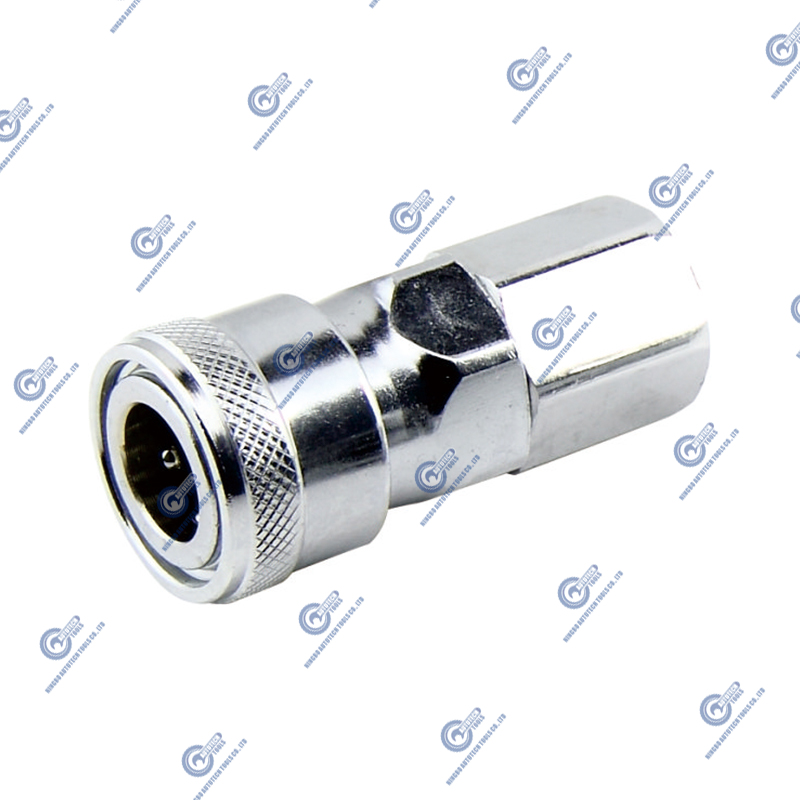
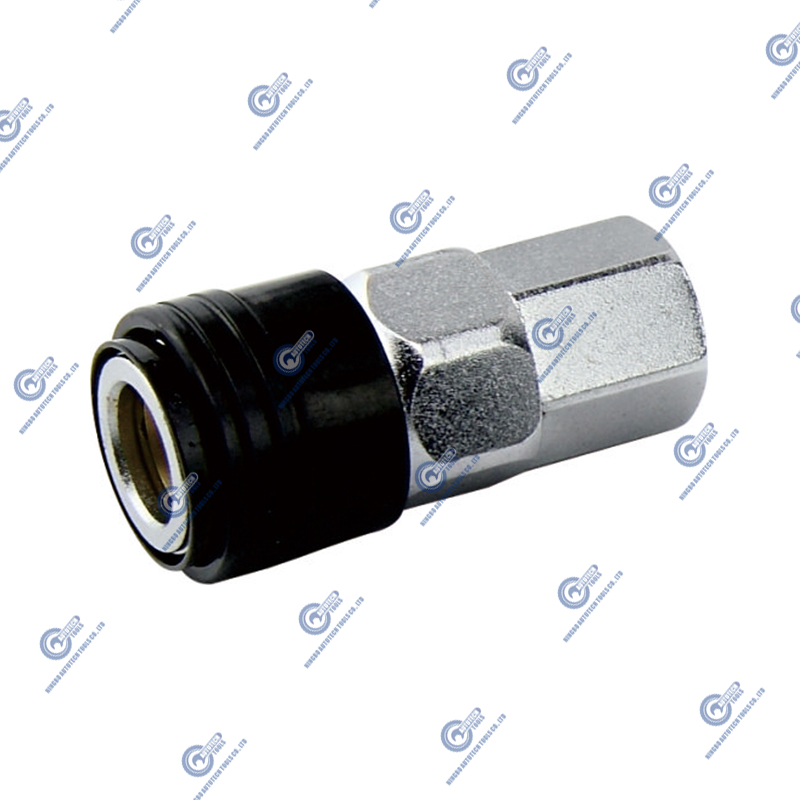
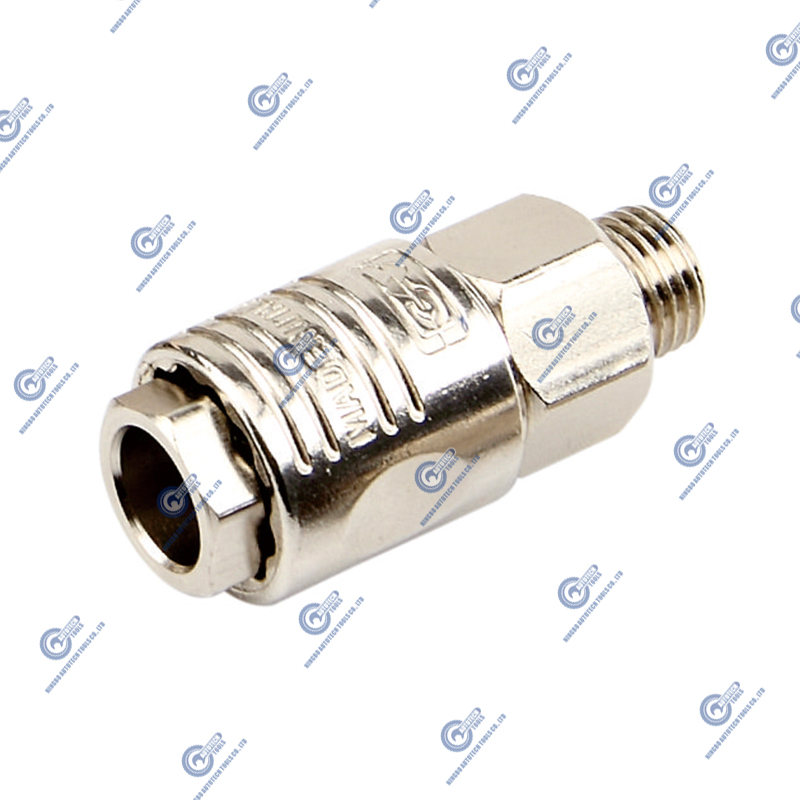
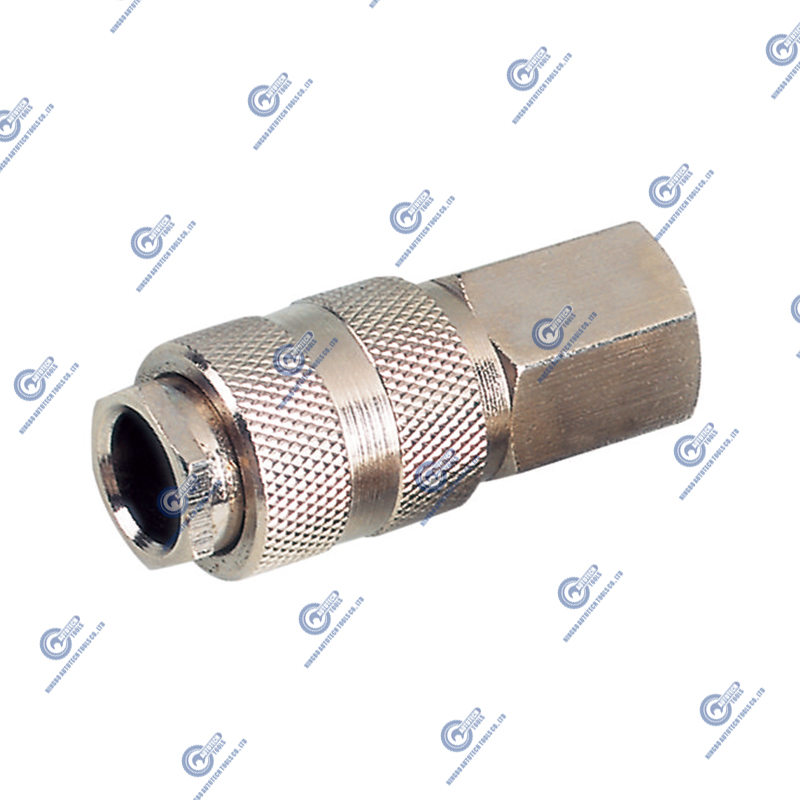
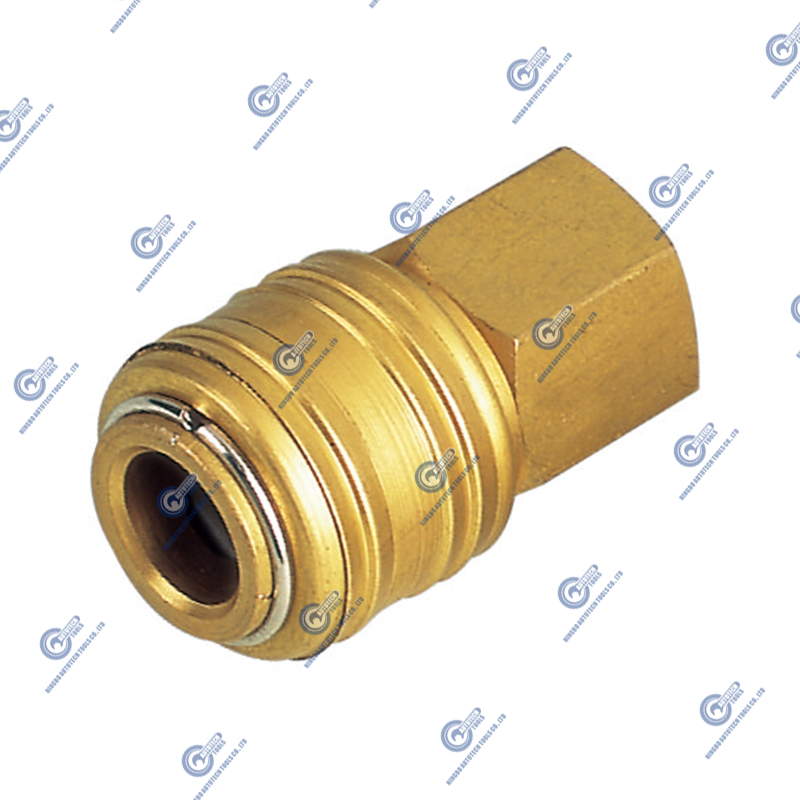
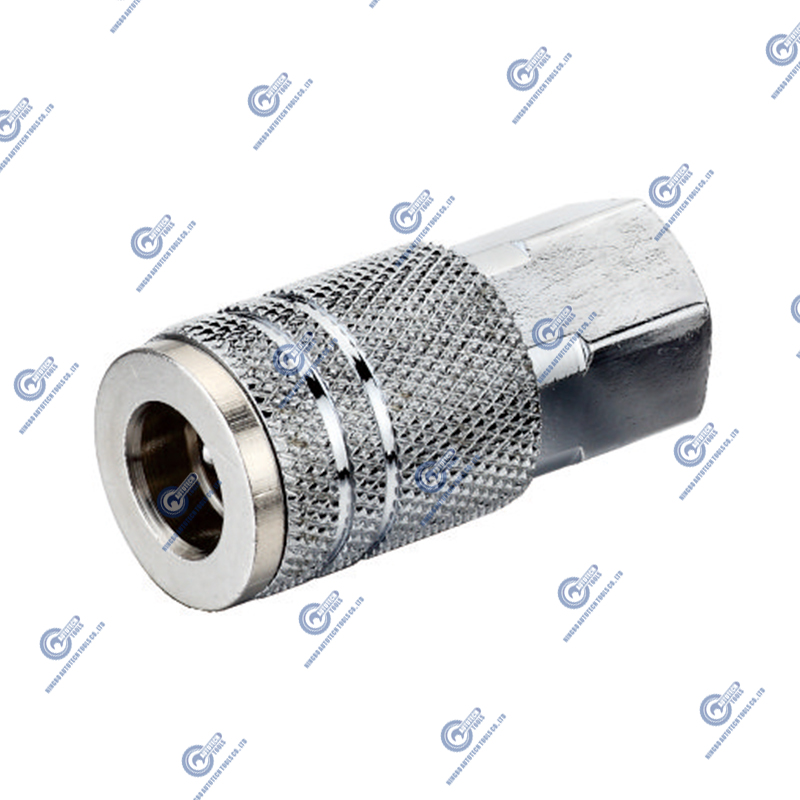
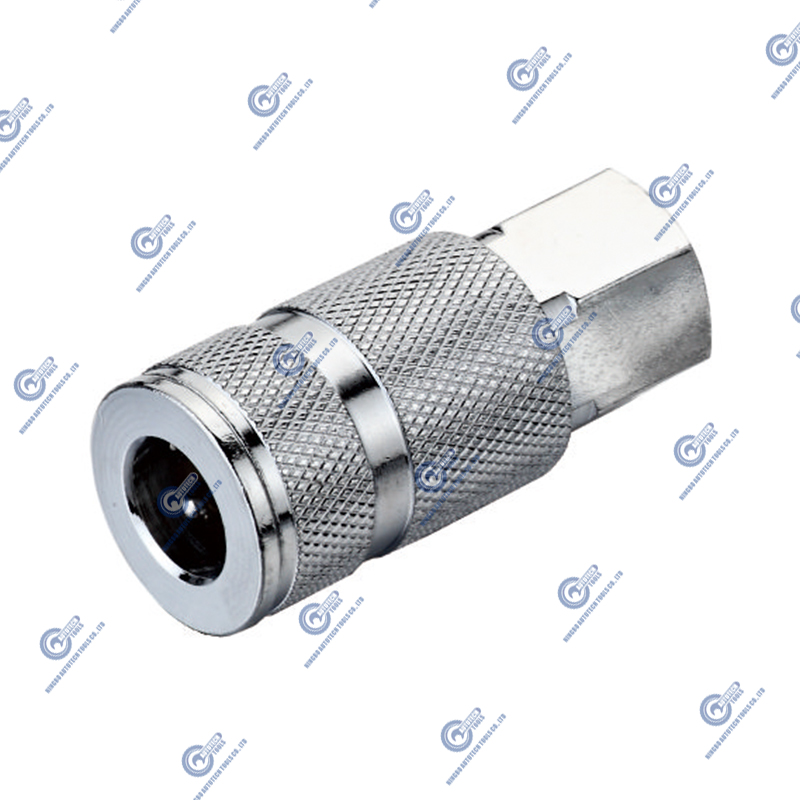

Ningbo Autotech Tools Co.,Ltd was founded in 2014 as a professional manufacturer of tire valves, tire repair tools & air quick couplings.
Product links
Contact Us
-
Address:No.16 Gaoqiang Road, Jiangnan Industrial Zone, Gaoqiao Town, Yinzhou District, Ningbo, China. 315175
-
Tel:+86-0574-89073063
-
E-mail:jimmy@autotechtool.com
