


 English
 Español
News
 Home / News / Industry news / Air Hose & Fitting Types Explained: Materials, Sizes, and Compatibility
 Air Hose & Fitting Types Explained: Materials, Sizes, and Compatibility
 2026.07.27
 Industry news
The Short Answer: Match Material to Environment, Fitting Style to Compatibility
For most shops, the right combination is a hybrid polymer or polyurethane hose paired with industrial (Milton/A-style) quick-connect fittings, which balances flexibility, cold-weather performance, and universal compatibility with the widest range of pneumatic tools. Rubber hoses remain the best choice for heavy-duty, high-abrasion environments, while PVC works for light, occasional use where cost matters more than durability.
Air Hose Materials Compared
Hose material affects flexibility, weight, cold-weather performance, and how well the hose resists abrasion, oil, and UV exposure over time. The four materials below cover nearly every air hose sold for shop, garage, or job site use.
Rubber Hose
Rubber hoses are the industry standard for heavy-duty applications because they resist abrasion, oil, and extreme temperatures better than any other common material, typically remaining flexible down to -20°F to -40°F depending on the compound. The trade-off is weight — rubber hoses are noticeably heavier than synthetic alternatives, which matters when dragging a long hose across a job site repeatedly.
PVC Hose
PVC is the lightest and least expensive option, making it popular for occasional home garage use. Its major limitation is cold weather performance — PVC becomes stiff and prone to cracking below roughly 40°F, which makes it a poor choice for outdoor or unheated shop use in colder climates, even though it performs adequately indoors at moderate temperatures.
Polyurethane Hose
Polyurethane hoses are lightweight, highly flexible, and retain flexibility in cold conditions far better than PVC, typically remaining usable down to around -10°F. They also resist kinking better than rubber due to their memory-retracting properties, which is why polyurethane is the dominant material in coiled recoil hoses used in auto shops and small workspaces.
Hybrid Polymer Hose
Hybrid hoses blend rubber and PVC or polyurethane compounds to combine the durability of rubber with the light weight and flexibility of synthetic materials. They've become a popular middle-ground choice for professional and semi-professional shops that need better cold-weather performance than rubber but more abrasion resistance than pure PVC or polyurethane.
Hose Material Comparison at a Glance
| Material | Cold Weather Limit | Best Use |
|---|---|---|
| Rubber | -20°F to -40°F | Heavy-duty, industrial, outdoor |
| PVC | ~40°F | Light, occasional indoor use |
| Polyurethane | ~-10°F | Coiled/recoil hoses, auto shops |
| Hybrid polymer | Similar to polyurethane | Professional shops, varied conditions |
Understanding Quick-Connect Fitting Standards
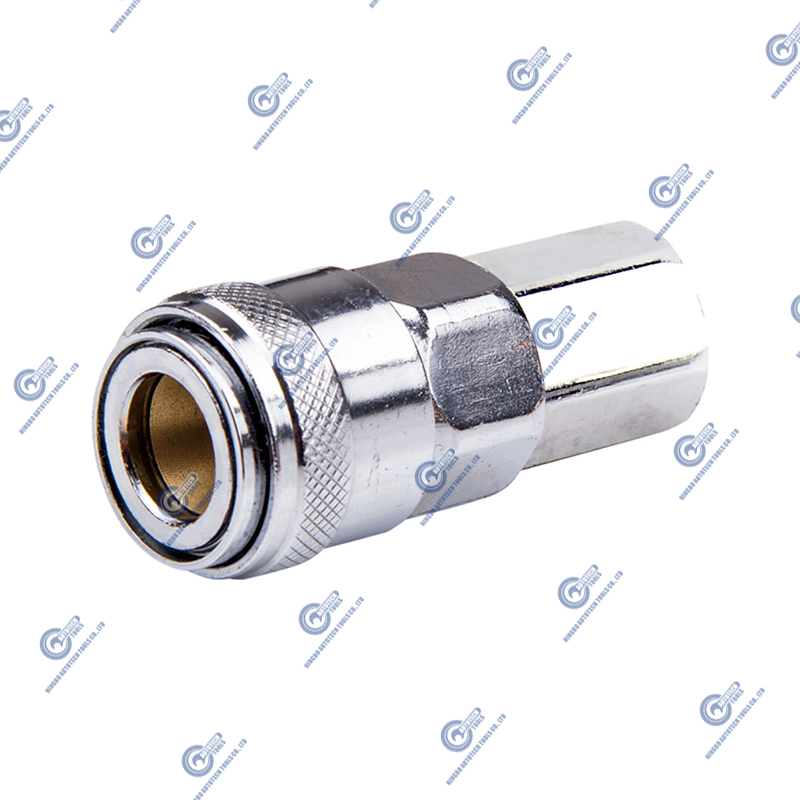
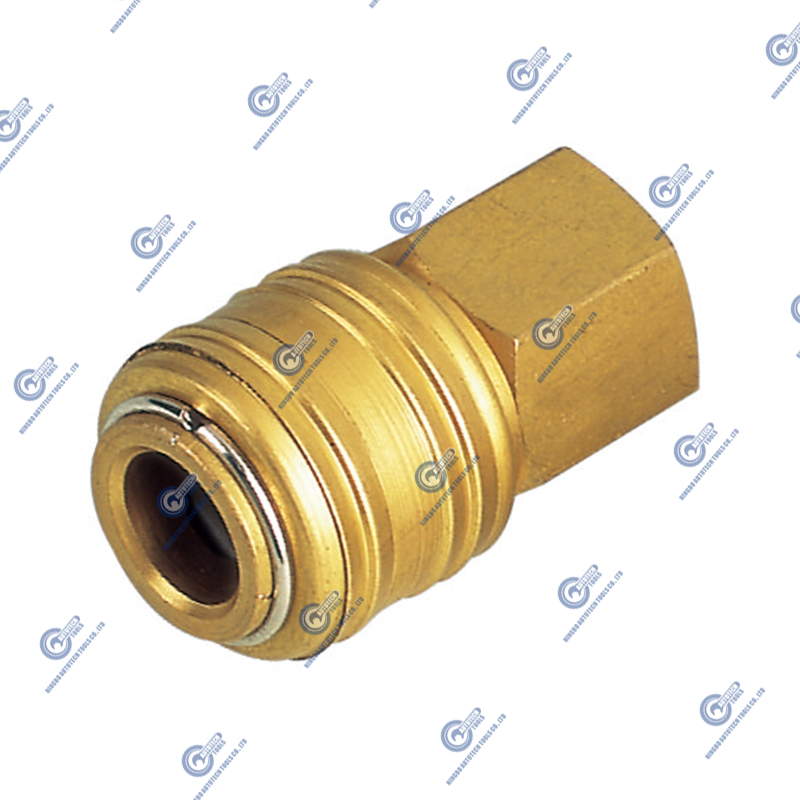
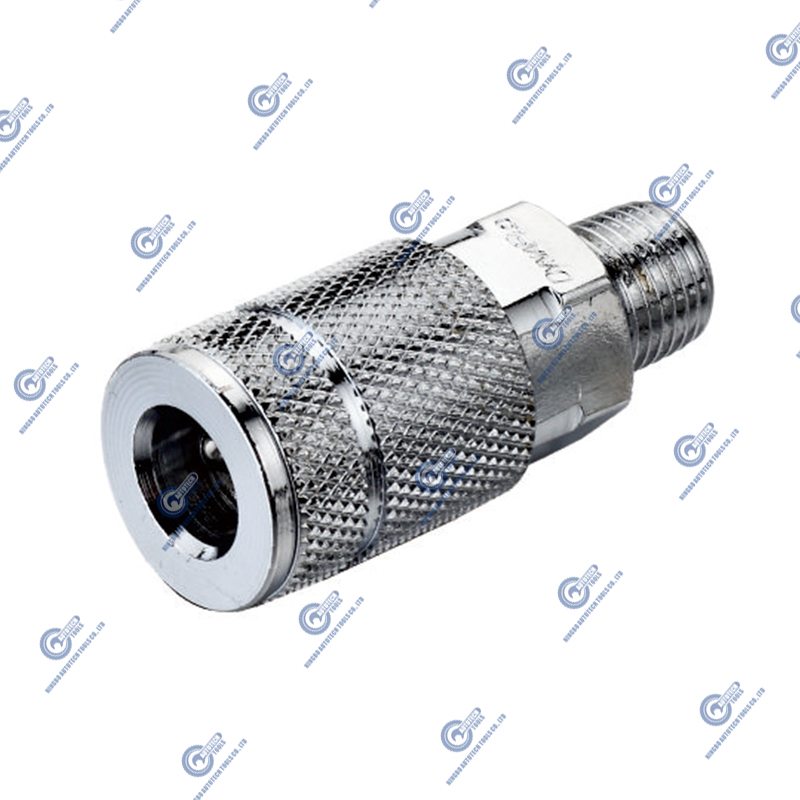
Quick-connect (also called quick-disconnect) fittings let tools be swapped without shutting off the compressor, but they are not universally interchangeable across brands and industries. Four coupler profiles account for the vast majority of pneumatic tools sold today, and mixing profiles is one of the most common causes of "compatible" hoses that don't actually connect.
The Four Common Profiles
- Industrial (Milton/A-style): the most common profile in North American auto shops and general hardware stores
- ARO (A-style variant): common on older or industrial equipment, similar sizing but distinct locking mechanism
- Automotive/Industrial (I/M-style): frequently found on tools from automotive supply brands
- European (Euro-style): common on imported tools and equipment, generally not compatible with U.S. industrial couplers
Because these profiles look similar at a glance but use different internal locking mechanisms, the safest approach is to standardize an entire shop on a single coupler profile rather than mixing brands, and to keep a small set of adapter fittings on hand for the occasional tool that uses a different standard.
Hose Diameter and Its Effect on Airflow
Inner diameter (ID) has a direct effect on how much air volume can travel through the hose per minute, which matters significantly for high-demand tools like impact wrenches, sanders, and paint sprayers. Using a hose that's too narrow for the tool's CFM (cubic feet per minute) requirement causes pressure drop at the tool end, even if the compressor itself is rated high enough.
| Hose ID | Typical Tool Use | Max Practical CFM |
|---|---|---|
| 1/4 inch | Brad nailers, inflation, light tools | Up to ~4 CFM |
| 3/8 inch | Impact wrenches, sanders, general shop use | Up to ~10 CFM |
| 1/2 inch | Sandblasters, high-CFM spray equipment | 15+ CFM |
Hose length compounds this effect: every additional 25 feet of hose length can reduce effective line pressure by roughly 1-2 PSI at a given flow rate, which is why long hose runs for high-demand tools should use a larger diameter than the same tool would need on a short run.
Thread Sizes and NPT Fitting Compatibility
Behind every quick-connect coupler is a threaded fitting, almost always NPT (National Pipe Thread) in North America. NPT fittings are tapered, meaning the threads get progressively tighter as they're screwed in, which creates the seal — this is different from straight-threaded fittings used in some hydraulic or specialty applications, and the two are not interchangeable.
The most common sizes in pneumatic setups are 1/4-inch NPT and 3/8-inch NPT, and matching the fitting size to the hose's rated diameter is essential — stepping down from a 3/8-inch hose to a 1/4-inch fitting creates the same pressure-restricting bottleneck as using an undersized hose in the first place. Always apply PTFE thread tape to NPT connections before assembly, since the tapered threads rely on it to seal completely without over-tightening and cracking the fitting.
Practical Steps for Avoiding Compatibility Mistakes
Compatibility issues are the most common frustration reported by both new and experienced shop owners when assembling or expanding a pneumatic setup. The steps below prevent the most frequent mistakes.
- Identify the coupler profile already used by your existing tools before buying any new hose or fitting
- Check the CFM requirement of your highest-demand tool and size hose diameter to that tool, not the average tool
- Choose hose material based on climate and use case — rubber for outdoor/heavy-duty, polyurethane for coiled shop use
- Confirm NPT thread size on both the hose fitting and compressor outlet before assembly
- Keep a small set of universal adapters on hand for occasional mismatched tools rather than replacing an entire hose setup
Getting material, diameter, and fitting profile right at the time of purchase avoids the most common source of wasted time in any shop: discovering mid-job that a hose, fitting, or tool doesn't actually connect the way it looked like it should on the shelf.

Ningbo Autotech Tools Co.,Ltd was founded in 2014 as a professional manufacturer of tire valves, tire repair tools & air quick couplings.
Product links
Contact Us
-
Address:No.16 Gaoqiang Road, Jiangnan Industrial Zone, Gaoqiao Town, Yinzhou District, Ningbo, China. 315175
-
Tel:+86-0574-89073063
-
E-mail:jimmy@autotechtool.com
