


 English
 Español
News
 Home / News / Industry news / How Do You Identify a Genuine European Profile Quick Release Coupling?
 How Do You Identify a Genuine European Profile Quick Release Coupling?
 2026.03.23
 Industry news
How Do You Identify a Genuine European Profile Quick Release Coupling?
In the precision-driven world of pneumatic systems, the hardware you choose dictates the efficiency of your entire production line. A genuine European Interchange Coupling (commonly referred to as the Euro Profile, DN 7.2, or Type 26) is engineered to provide a high-flow, leak-free connection that sustains industrial-grade air tools. However, the market is saturated with “universal” fittings that claim compatibility but fail under pressure. Identifying a genuine coupling is about more than just a brand name; it is about recognizing specific metallurgical standards and precise geometric profiles that ensure workplace safety and energy efficiency.
The Importance of the DN 7.2 Standard
The term “European Profile” specifically refers to the 7.2mm nominal diameter internal orifice. This design is the standard across Europe, popularized by manufacturers like Rectus and Cejn. A genuine coupling must adhere to the ISO 6150-B or DIN EN 983 safety standards. Using a non-genuine coupling can lead to “interchange mismatch,” a dangerous condition where a plug appears to be locked but can become a high-velocity projectile if the locking mechanism fails under load.
Visual and Tactile Hallmarks of Quality
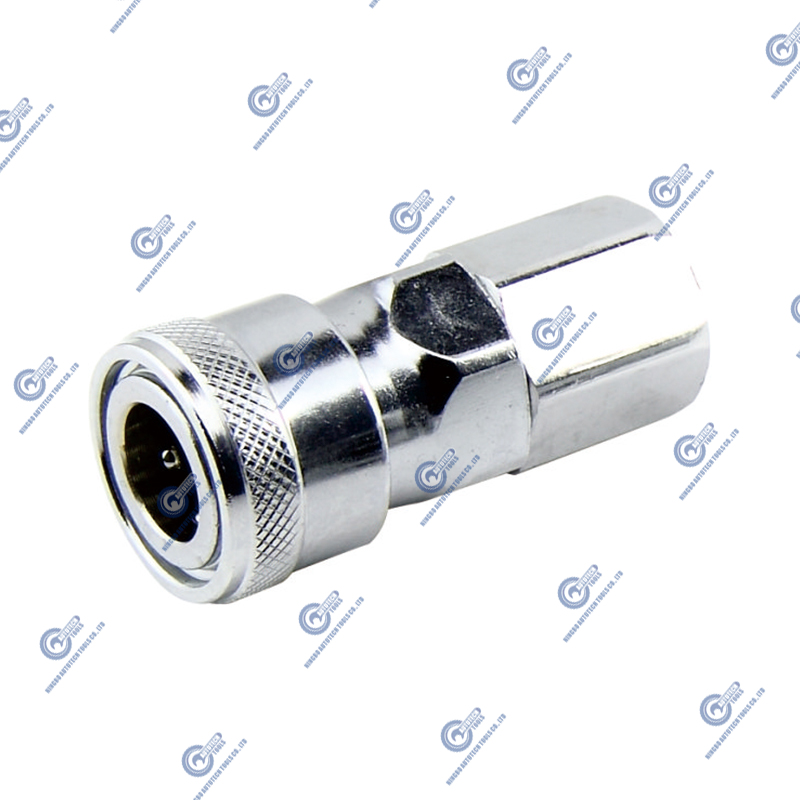
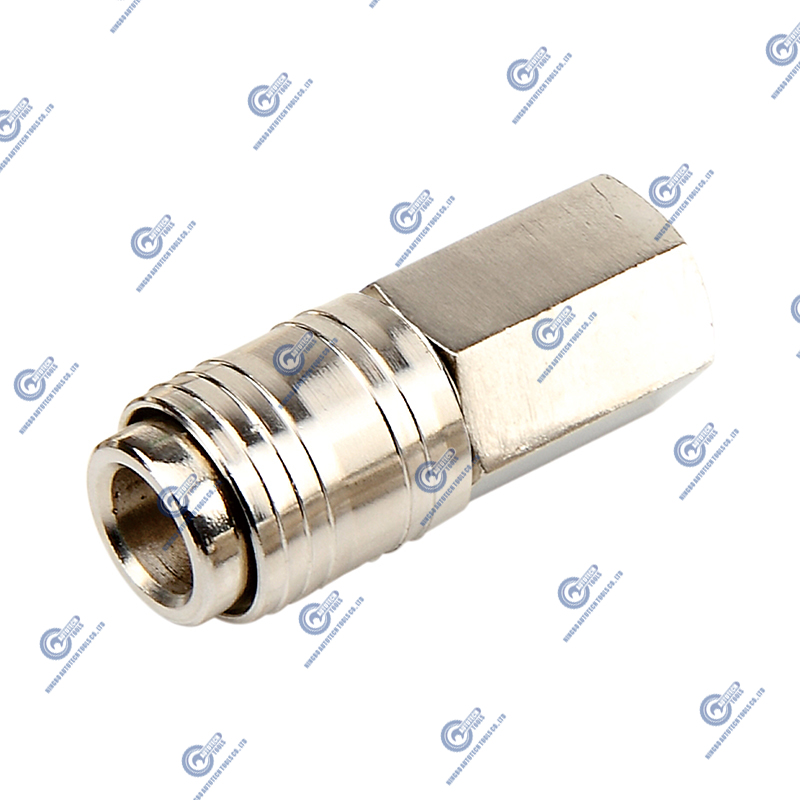
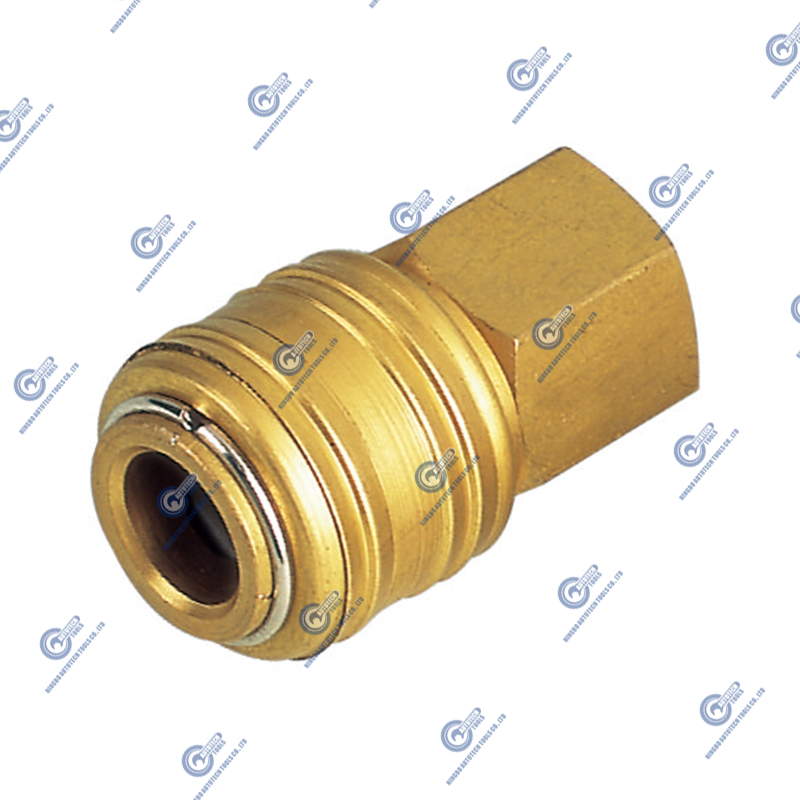
When you hold a genuine European coupling, the build quality should be immediately apparent. Authentic fittings are typically machined from high-tensile brass or hardened steel with a nickel-plated finish for superior corrosion resistance. Unlike cheap cast imitations, which often show “pitting” or rough edges, a genuine coupling will have smooth, machined surfaces and clearly defined stamps indicating the manufacturer and pressure rating. The tactile experience is also a giveaway: a genuine coupling offers a smooth, “one-handed” connection with a sharp, audible “click” that confirms the locking balls have fully engaged the plug.
Physical Dimensions: The Technical Anatomy of a Euro Plug
To ensure you are using a genuine European Profile, you must look beyond the surface and measure the physical dimensions with a digital caliper. Because many pneumatic fittings look similar to the naked eye, understanding the specific “geometry of the interchange” is the only way to prevent costly air leaks and system inefficiency.
Measuring the Probe and Groove
The most distinctive feature of a European Interchange Coupling plug is its shorter, wider profile compared to the American Industrial (M-Style) counterpart.
- Probe Diameter: A genuine DN 7.2 plug features a probe diameter of approximately 12mm. If the measurement is significantly smaller, you are likely looking at a US or ARO standard plug, which will not seal correctly in a European socket.
- The Locking Groove: The groove where the locking balls reside is deeper and wider in a genuine Euro-profile. This provides a larger surface area for the balls to grip, which is essential for maintaining a seal at 150 PSI or higher.
- Tip Geometry: Authentic plugs have a precision-machined chamfer (a beveled edge) at the tip. This is not for aesthetics; it is designed to guide the plug smoothly past the internal O-ring without tearing the rubber, ensuring a leak-free connection for thousands of cycles.
Why Precision Prevents Pressure Drop
In a “close-enough” imitation coupling, the internal tolerances are often loose. This causes the plug to sit slightly off-center within the socket. Even a microscopic misalignment allows compressed air to escape, leading to a constant “hissing” in the workshop. More importantly, poor internal geometry creates turbulence, which causes a significant pressure drop. This means that while your compressor is set to 90 PSI, your impact wrench might only be receiving 75 PSI, directly reducing your tool’s torque and productivity.
Performance Markers: High Flow and Safety Engineering
Professional workshops prioritize European Interchange Couplings because of their “High-Flow” architecture. Identifying a genuine coupling means verifying its performance data. A genuine DN 7.2 coupling is an “open-flow” masterpiece, designed to move a massive volume of air with minimal resistance.
Flow Rate and Tool Efficiency
A genuine Euro-profile coupling supports flow rates of up to 1,800 L/min (approx. 63.5 CFM) at a standard 6 Bar pressure. This is nearly 50% more air than a standard US Industrial coupling of the same size. If your pneumatic tools—such as 1-inch impact wrenches or high-volume spray guns—are underperforming, the first place to check is the coupling. A genuine coupling will have a streamlined internal valve that opens fully and stays open, providing the consistent power required for heavy-duty manufacturing.
Safety Factors and Burst Pressure
Safety is the most critical identifier of an industrial-grade coupling. Genuine European manufacturers build their products with a 4:1 safety factor. For instance, if a coupling is rated for a working pressure of 16 Bar (232 PSI), it is engineered to withstand a burst pressure of 64 Bar. Cheap imitations rarely provide these technical specifications. A genuine coupling also features a “safety-lock” or “self-bleeding” option (often seen in ISO 4414 compliant models) that vents downstream air before the plug is released, preventing “hose whip”—a leading cause of workshop injuries.
Technical Comparison of Global Coupling Standards
Use the following table to audit your current inventory and ensure you are providing your team with the correct European Profile hardware.
| Feature | European Profile (DN 7.2) | US Industrial (M-Style) | ARO Standard (210) |
|---|---|---|---|
| Interchange Name | Type 26 / Rectus 25 / Cejn 320 | MIL-C-4109 / ISO 6150-B | A-Style / 210 |
| Plug Diameter | ~12.0 mm | ~10.9 mm | ~8.3 mm |
| Flow Capacity | Extreme High Flow | Moderate | Low to Moderate |
| Typical Material | Brass/Steel (Nickel Plated) | Zinc-Plated Steel | Steel/Brass |
| Common Application | Professional High-Torque Tools | General Shop Air | Small Pneumatic Tools |
| Identification Cue | Short, thick “nose” | Long, slender “nose” | Narrow “neck” design |
FAQ: Frequently Asked Questions
Can I use a European DN 7.2 plug in a “Universal” socket?
While “Universal” sockets are designed to accept multiple profiles, they often compromise on seal integrity and flow rate. For high-pressure or industrial environments, we always recommend matching a genuine European plug with a dedicated European socket for a 100% leak-free seal.
Does a European Interchange Coupling require special maintenance?
To maintain “Genuine” performance, we recommend a light drop of pneumatic tool oil into the socket every few months to keep the internal locking balls and O-rings lubricated. This prevents the “dry-seal” friction that can lead to premature wear.
Why is my “Euro” coupling leaking when brand new?
If a new coupling leaks, check the plug’s dimensions. Many users accidentally mix European plugs with Asian-market “High-Flow” variants that differ by only 0.2mm—enough to cause a persistent leak under pressure.
References and Technical Resources
- ISO 4414: Pneumatic fluid power — General rules and safety requirements for systems.
- DIN EN 983: Safety of machinery — Safety requirements for fluid power systems — Pneumatics.
- Compressed Air & Gas Institute (CAGI): Selection Guide for Quick-Action Couplings.

Ningbo Autotech Tools Co.,Ltd was founded in 2014 as a professional manufacturer of tire valves, tire repair tools & air quick couplings.
Product links
Contact Us
-
Address:No.16 Gaoqiang Road, Jiangnan Industrial Zone, Gaoqiao Town, Yinzhou District, Ningbo, China. 315175
-
Tel:+86-0574-89073063
-
E-mail:jimmy@autotechtool.com
